Most medium and large industries take their power at high voltage. Smaller units usually connect at 11 kV, while bigger plants with heavy loads often connect at 33 kV. Getting 33 kV and 11 kV work in Chhattisgarh done properly decides how reliable your supply will be for years.
HT work is not something to rush. It involves live lines, heavy equipment and strict safety rules. This guide explains the typical scope, how a good contractor plans it, and what you should check before the line is charged.
Why plants connect at 11 kV or 33 kV
Taking supply at a higher voltage reduces current for the same power. Lower current means smaller losses in cables and lines, and better voltage at the far end of the plant. The supply company decides the voltage level based on your sanctioned load.
- 11 kV is common for small and medium factories, commercial buildings and colonies.
- 33 kV is common for larger plants such as rolling mills, sponge iron plants and process industries.
Once the voltage level is fixed, the HT equipment, transformer and protection are designed around it.
What 33 kV and 11 kV work in Chhattisgarh usually covers
The exact scope depends on the site, but a typical HT package includes several of these items:
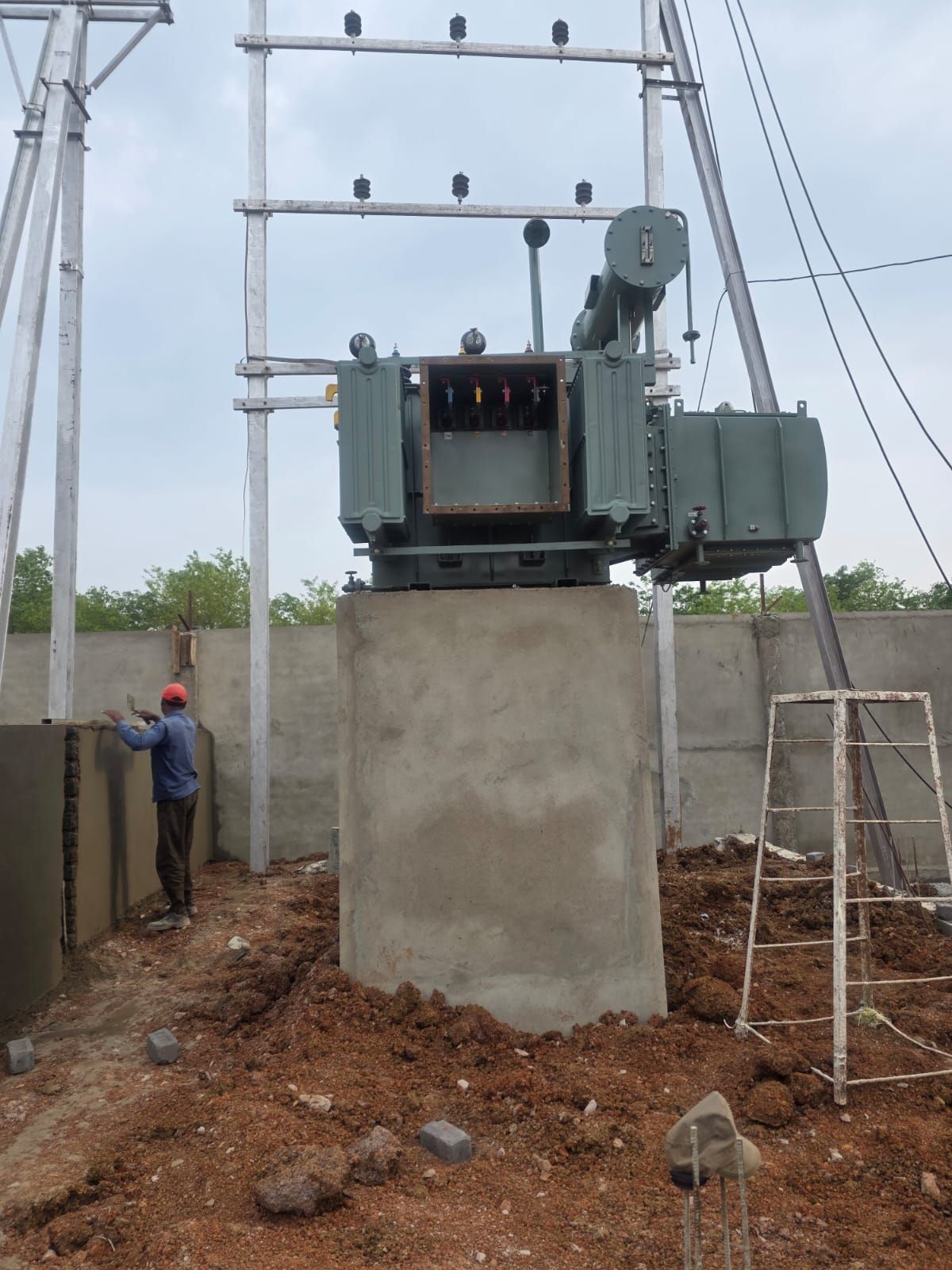
- HT overhead line from the supply point, with poles, cross-arms, insulators and conductors.
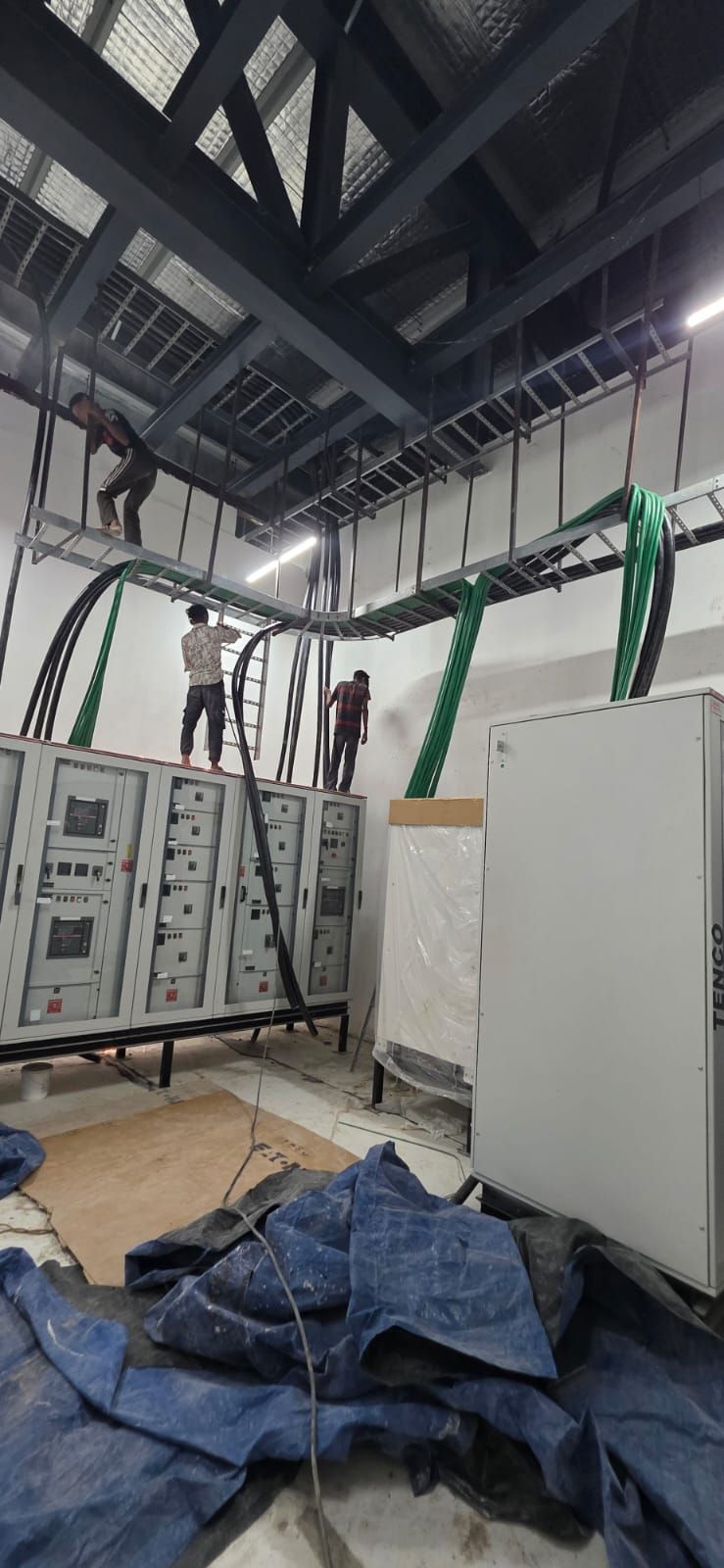
- Underground HT cable laying where an overhead line is not possible.
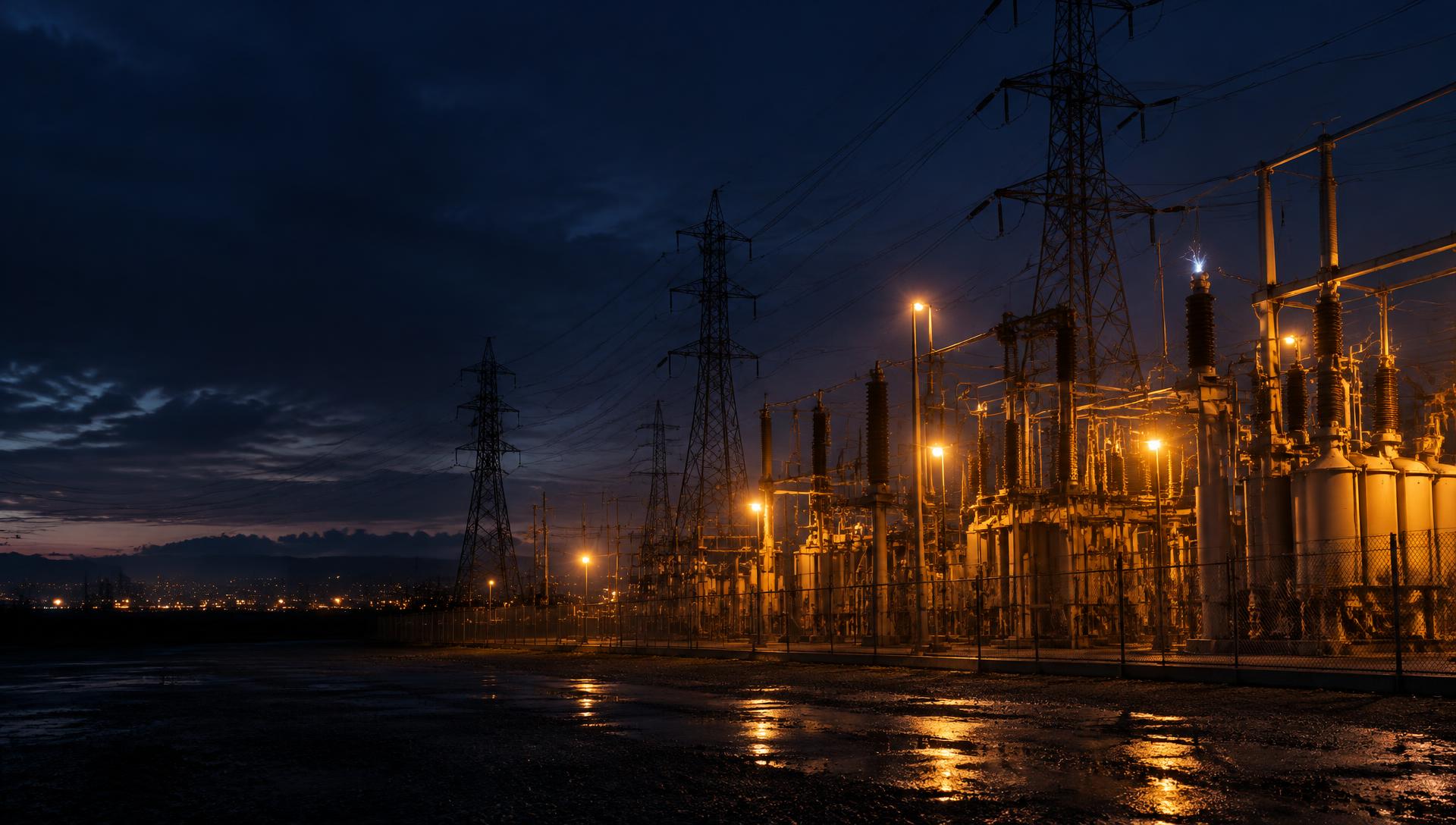
- Outdoor switchyard structures with isolators, lightning arresters and metering.
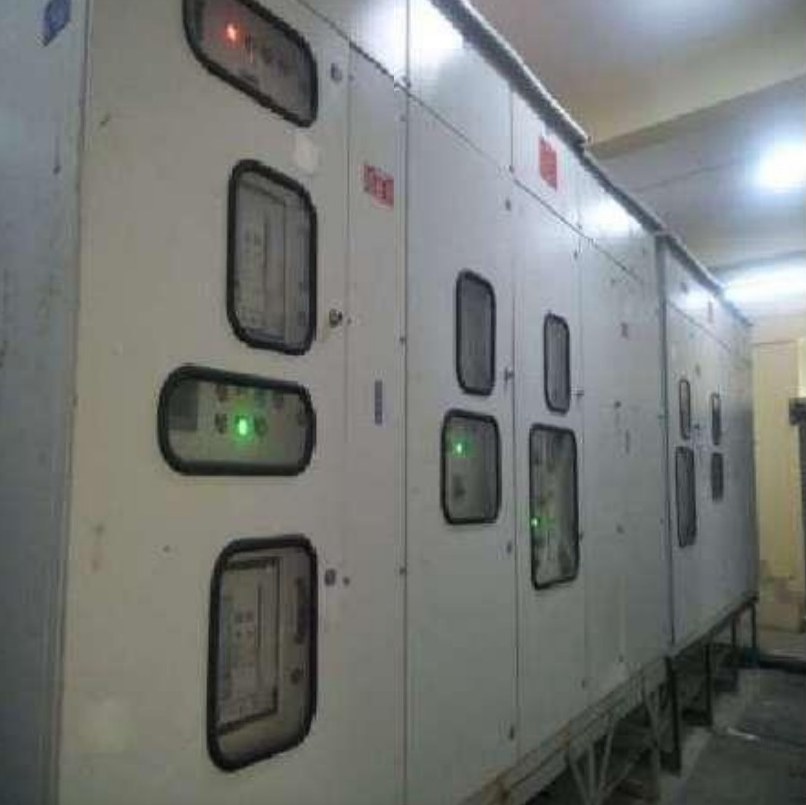
- Indoor HT panels or VCB panels for incoming and outgoing feeders.
- HT cable jointing and indoor or outdoor terminations.
- Transformer HT side connection and protection.
- Earthing of all HT structures and equipment.
Each part must match the others in rating. A VCB rated for the wrong fault level, or a cable too small for the load, can fail under stress.
Choosing the right HT equipment
HT equipment is expensive and lasts a long time, so it pays to choose carefully. A few points matter most.
- Fault level: breakers, isolators and busbars must be rated for the fault current at your supply point.
- Indoor or outdoor: outdoor switchyards suit larger plants with space; indoor VCB panels suit compact sites.
- Metering: the supply company usually specifies the metering arrangement and its location.
- Protection: overcurrent and earth fault relays are standard, with more advanced protection for large transformers.
- Spares: keep spare fuses, insulators and termination kits so small failures do not stop the plant.
Ask the contractor to confirm that all equipment matches the approved drawings and the supply company's requirements. For 33 kV and 11 kV work in Chhattisgarh, approvals can take time, so it helps to submit complete drawings and test documents early.
HT work is usually done under a planned shutdown. The supply is switched off, the line is earthed, and a permit is issued before work starts.
Before the shutdown
Good contractors do as much as possible in advance. Poles are erected, structures assembled, cables laid and terminations prepared. Earthing is completed and tested. Materials are checked against the approved list.
During the shutdown
Only the final live-side connections are left. The crew works to a clear sequence, with one person responsible for the permit and isolation. Nobody touches a conductor until it has been proven dead and earthed.
After the work
Temporary earths are removed only when every person is clear. The permit is returned, and the line is charged in a controlled way.
Testing before charging
Testing protects your equipment and your people. Never skip it to save time on the shutdown day.
- Insulation resistance tests on HT cables and equipment.
- High-voltage tests on cable terminations where specified.
- Checking relay settings and trip circuits on VCB panels.
- Earth resistance testing of HT equipment earth pits.
- Phase sequence and continuity checks before final connection.
Record every result. These records are often needed for inspection and approval before the supply is charged, and they help with fault finding later.
Common problems on HT sites
Most HT failures trace back to a small number of causes. You can prevent many of them during installation.
- Poor cable terminations, with stress control not done to the kit instructions.
- Water entering cable joints or termination boxes.
- Loose connections that heat up and fail under load.
- Missing or weak earthing on structures and lightning arresters.
- Vegetation or birds causing flashovers on overhead lines.
Good workmanship, the right kits and regular inspection keep these problems away. Our guide to cable jointing and terminations covers the jointing side in more detail.
Maintenance after commissioning
HT equipment needs periodic checks. Insulators should be cleaned, connections tightened and relays tested. Earth pits should be re-tested before the monsoon. A yearly maintenance plan for 33 kV and 11 kV work in Chhattisgarh keeps your incoming supply reliable through heat, dust and heavy rain.
Next steps
Collect your sanctioned load, supply voltage and site layout, then ask for a survey. A clear scope and shutdown plan is the base of a safe HT project.
Bari Electrical Services handles HT work, including 11 kV and 33 kV line work, HT panel erection and VCB connections. See all our services, or contact us to plan 33 kV and 11 kV work in Chhattisgarh. You can also call 70006-76224 or 73890-14890.