A cable can run trouble-free for decades. The weak points are almost always where it is joined or terminated. Heat, moisture and poor workmanship cause most failures, which is why cable jointing is a job for trained hands.
Here is what good cable jointing and termination look like, and what to check before a cable is switched on.
When you need a straight-through joint
A straight-through joint connects two lengths of cable end to end. You need one when:
- A run is longer than one cable drum.
- A section has been damaged and must be replaced.
- A cable route is being extended or diverted.
Every joint is a potential weak point. Plan routes to keep joints to a minimum, and record where each one is.
Choosing the right cable jointing kit
Match the kit to the cable
Kits are made for a specific voltage class, cable type (XLPE or PVC), conductor size and number of cores. LT and HT kits are not interchangeable.
Heat-shrink or cold-shrink?
Heat-shrink kits are widely used and economical. Cold-shrink kits need no flame, which helps in confined or hazardous areas. Both work well when installed exactly as the maker specifies.
How a good HT joint is made
HT cables have an insulation screen that controls electrical stress. The jointer removes it to the exact length, cleans the insulation, and fits stress control so the electric field doesn't concentrate at one point. Screen and armour continuity must then be restored across the joint.
- Test the insulation resistance of both cable ends.
- Prepare the cable to the kit's dimensions.
- Connect the conductors with the correct ferrule and crimp.
- Apply stress control, insulation and outer sleeves.
- Restore screen and armour earthing, then test again.
Cable terminations and lugs
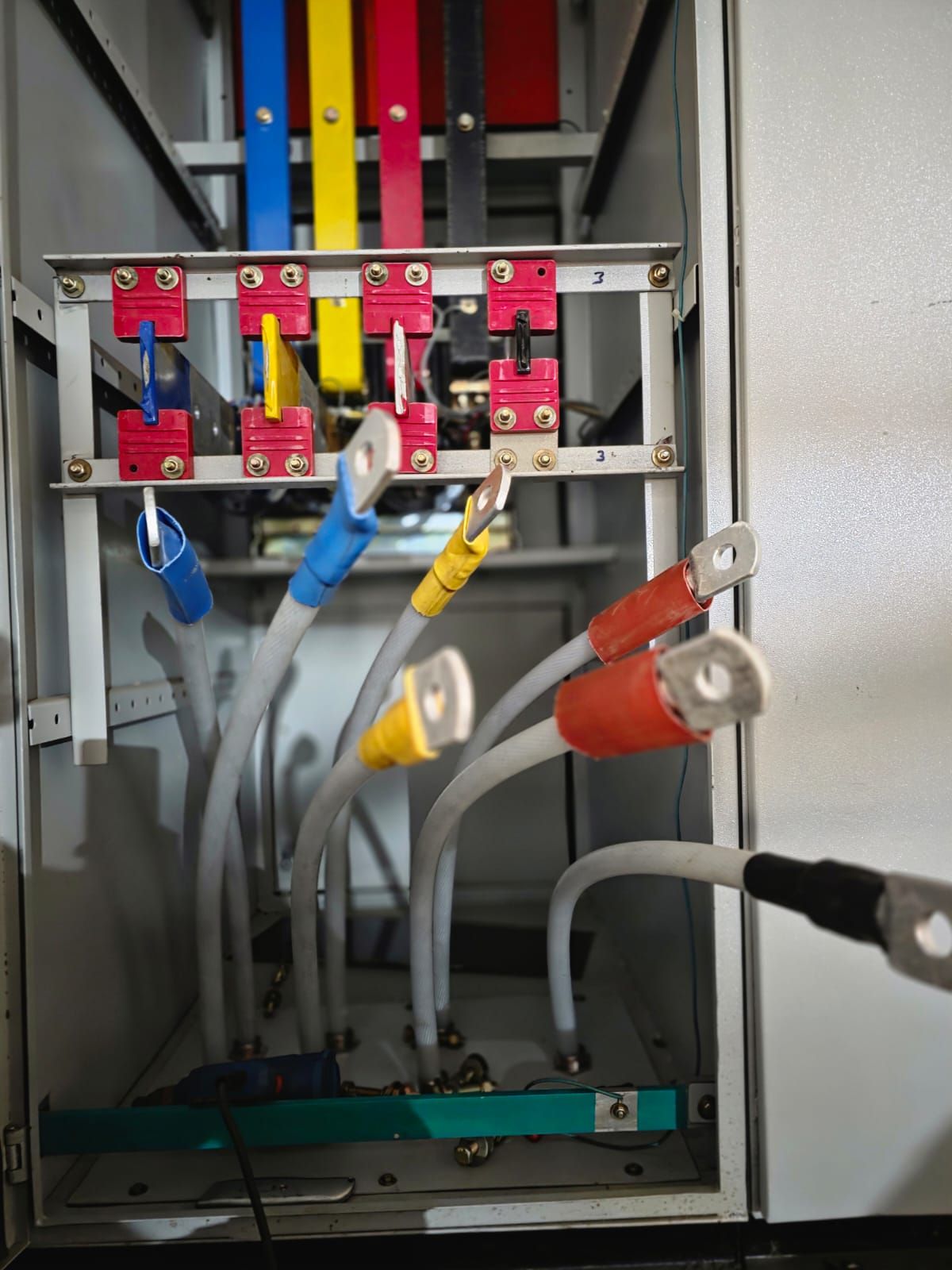
Many panel burnouts start at a loose or wrong lug. Match the lug to the conductor size and material, use the correct die, and crimp with a proper tool. Use bi-metallic lugs where aluminium cable meets a copper busbar.
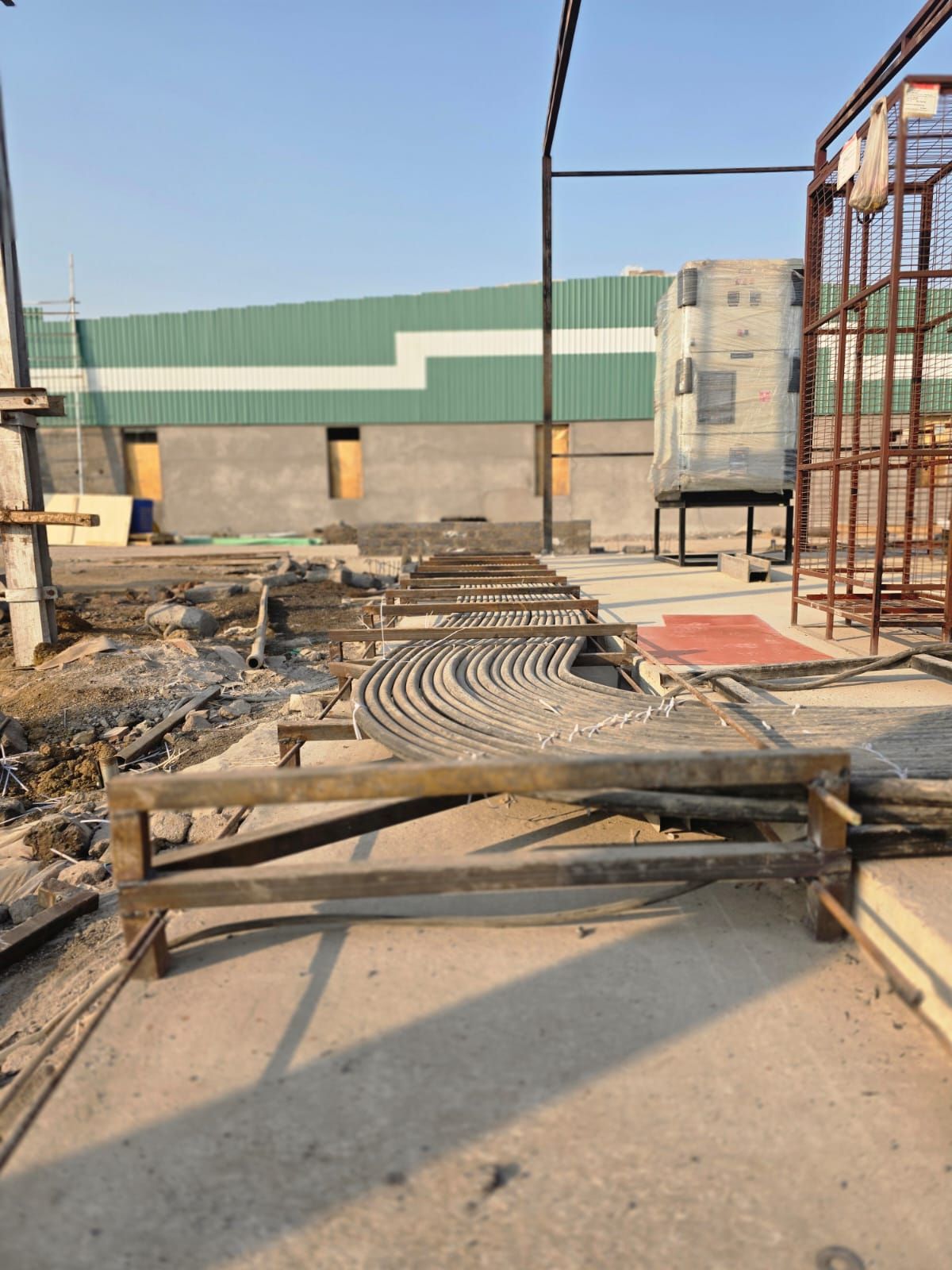
Tight, colour-coded terminations also make panel maintenance easier, because hot spots are easy to find. Good cable laying reduces the number of joints you need in the first place.
Key takeaways
Cable jointing and termination decide how long a cable system lasts. Use the right kit for the cable, follow the dimensions exactly, crimp properly, restore screens and armour, and test before and after.
Our crews handle LT and HT joints and terminations every week, from Raipur and on sites across India. See our jointing service, browse finished work on the projects page, or contact us for a quote.