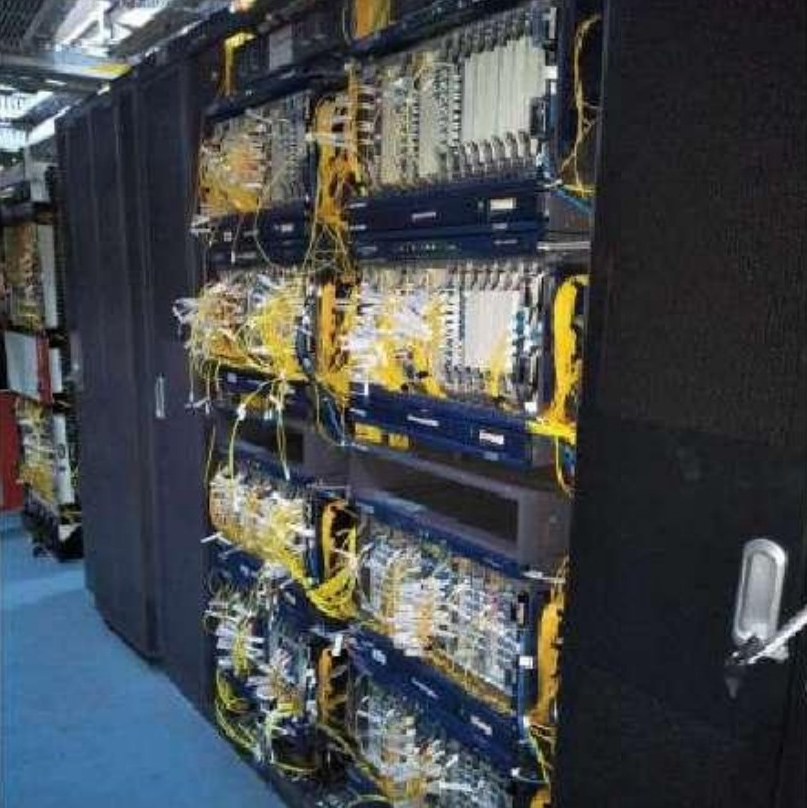
For telecom operators, every minute of downtime costs money and customers. That is why telecom power is built in layers, each one ready to take over from the last.
In short: the grid feeds an LT panel, a DG set with an AMF panel covers grid failures, a battery bank bridges the gap, and PAC units keep the equipment cool. Here is how the chain fits together.
The telecom power chain at a glance
- Grid supply lands on the main LT panel.
- The LT panel feeds rectifiers, cooling and auxiliary loads.
- Each rectifier converts AC to the DC voltage telecom equipment runs on, typically −48 V.
- A battery bank floats on the DC bus, ready to carry the load instantly.
- A DG set starts automatically when the grid fails.
Grid supply and the LT panel
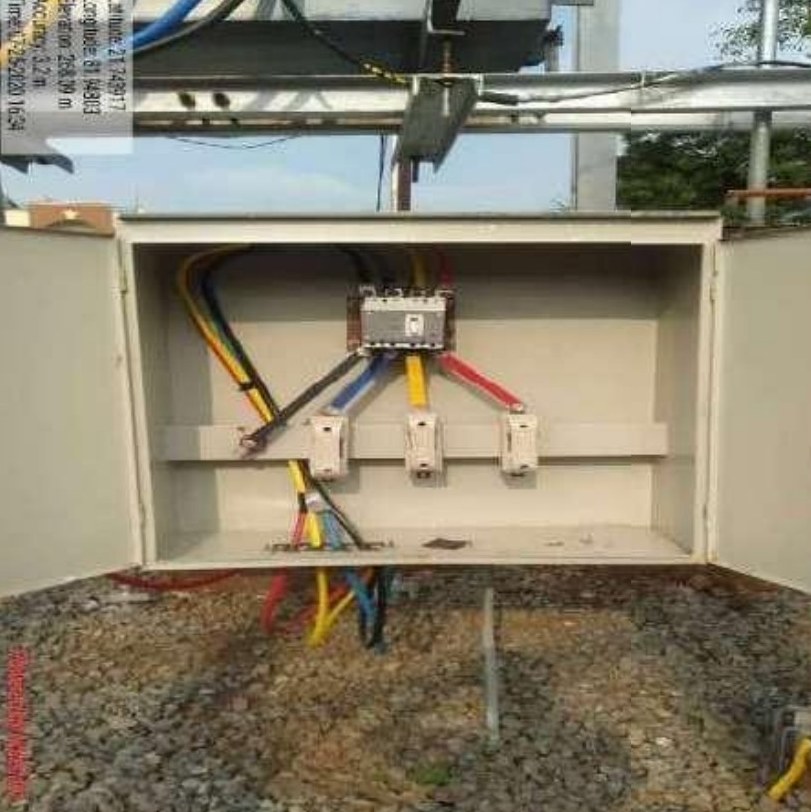
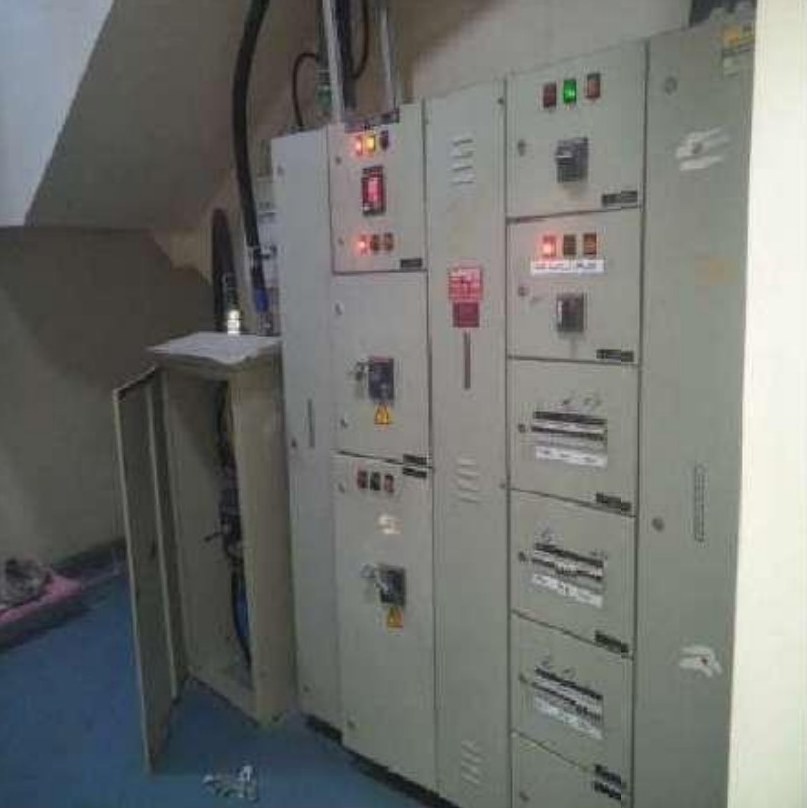
Incoming supply lands on a main LT panel that feeds every load on site. Clean terminations, correct breaker sizing and good earthing here keep everything downstream stable. Our guide to LT panel maintenance lists the checks that prevent most failures.
DG set and automatic changeover
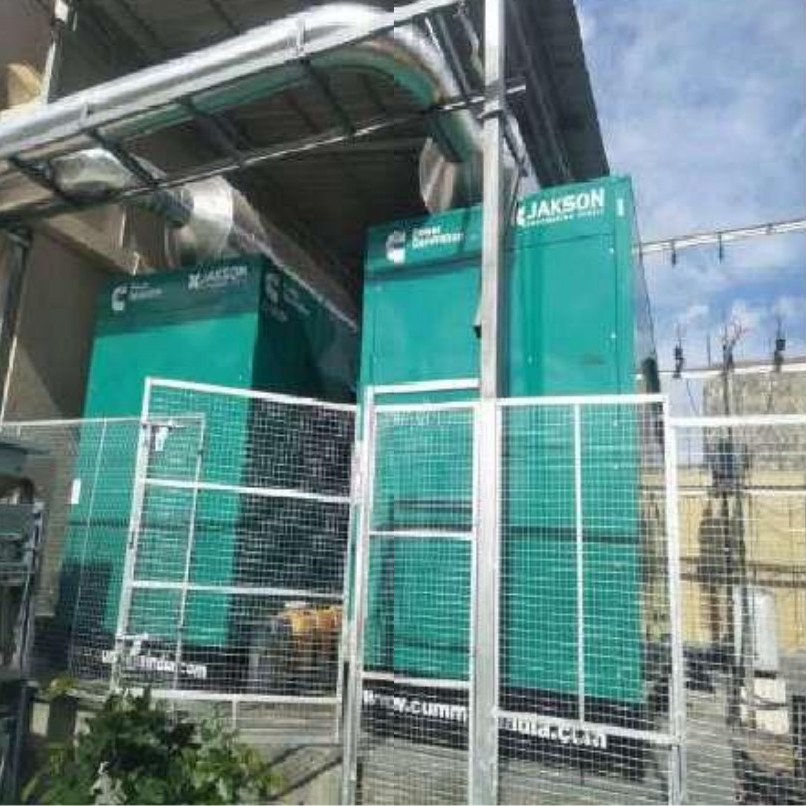
When the grid fails, an AMF (auto mains failure) panel starts the DG set and switches the load across automatically. When the grid returns, it switches back and lets the set cool down before stopping.
- Size the DG set for the full site load, including the PAC units.
- Use an interlocked changeover so the DG and grid can never feed together.
- Run regular load tests so you know the set will start when needed.
Our DG set installation checklist covers foundations, fuel and exhaust in more detail.
Battery bank and rectifiers
The battery bank carries the load for the minutes until the DG set picks up — or for hours at sites without a generator. It needs a dedicated, ventilated room, correctly sized DC cabling and fuses, and regular checks of cell voltages and connections.
Keep DC cabling short and protected
Long or undersized DC runs waste energy and drop voltage. Route them neatly on trays and protect each battery string separately.
PAC units and cooling
Telecom equipment must stay within tight temperature limits. Precision air-conditioning (PAC) units run around the clock, so they need their own protected feeders. They must also stay on the DG set's load when the grid fails.
Earthing for telecom sites
Sensitive electronics need a low-resistance earthing system with proper bonding of racks, cable trays and lightning protection. Poor earthing often shows up as unexplained equipment failures after storms.
Next steps for your site
Reliable telecom power comes from treating the grid, DG set, battery bank and cooling as one system rather than four separate purchases.
We have powered MSC and tower sites for operators such as Airtel, Jio, Vodafone and Idea from our base in Raipur. See some of them on the projects page, read about our generator installation service, or request a site survey.